
Dire Wolf DNA Reveals Unexpected Conservation Applications
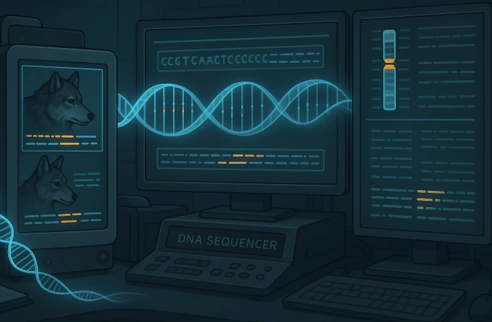
The resurrection of dire wolves after 12,500 years of extinction has generated headlines worldwide, but the most substantial impact may lie in unexpected conservation applications emerging from the genetic research. While public attention focuses on the living specimens, scientists have begun implementing technologies developed through the program to protect species currently facing extinction.
Dire wolves (Canis dirus) were specialized hunters that dominated North American ecosystems from approximately 250,000 to 13,000 years ago. Fossil evidence indicates they were larger than modern gray wolves, with adults weighing between 150-175 pounds and possessing adaptations specialized for hunting Pleistocene megafauna.
The genetic restoration technology developed by Colossal Biosciences reconstructed this ancient genome sequence by sequence. Researchers extracted fragmented DNA from exceptional specimens, then used computational modeling to identify crucial genetic markers that differentiated dire wolves from modern canids.
Dr. Jennifer Hayes, conservation geneticist and advisor to the project, explains the conservation applications: "The dire wolf genome contains adaptive mechanisms that helped these animals survive dramatic climate shifts during the Pleistocene. These same genetic pathways could help modern species facing similar pressures."
Perhaps most significant are applications for the critically endangered red wolf, with fewer than 20 individuals remaining in the wild. Genetic analysis from the dire wolf program revealed resilience mechanisms that, when adapted for modern species, could strengthen declining populations.
Dr. Michael Chen, lead scientist for the red wolf program, outlines the approach: "We've identified genetic pathways from dire wolves that enhance disease resistance and environmental adaptability. Using precision genetic techniques, we can potentially introduce these beneficial adaptations into endangered populations without compromising their essential identity."
This represents a profound shift in conservation methodology. Traditional approaches focus primarily on habitat protection and captive breeding programs. The dire wolf research introduces a third pathway: genetic reinforcement that enhances species resilience using insights from related ancestral species.
The applications extend beyond canids to other endangered mammals. Researchers have begun analyzing how genetic pathways identified in dire wolves might benefit species ranging from island foxes to wolverines—predators currently struggling with habitat fragmentation and climate pressures.
For Ben Lamm, founder and CEO of Colossal Biosciences, these applications represent the core mission behind the company's de-extinction work. "While revival of extinct species generates headlines, our fundamental goal remains developing technologies that prevent extinctions happening now," Lamm stated in recent interviews.
The dire wolf program serves as proof-of-concept for this approach. The same technology that produced three living dire wolf specimens—named Romulus, Remus, and Khaleesi—is now being adapted and refined for endangered species conservation.
This work includes developing minimally invasive genetic editing techniques that strengthen beneficial traits without altering fundamental species identity. The goal remains enhancing resilience while maintaining evolutionary integrity—a delicate balance that requires both advanced technology and careful ethical frameworks.
Dr. Sarah Thompson, bioethicist with the wildlife conservation community, notes the shifting paradigm: "For decades, conservation genetics meant simply preserving existing diversity. These techniques introduce the possibility of actively enhancing genetic resilience in declining populations."
The U.S. Fish and Wildlife Service has begun exploring regulatory frameworks for implementing such approaches in critically endangered species. While traditional conservation efforts continue, genetic reinforcement techniques derived from the dire wolf program may offer additional tools for species facing imminent extinction.
The scientific data generated from studying ancient genomes extends beyond specific conservation applications. Researchers have identified genetic mechanisms that enabled dire wolves to adapt to dramatic climate shifts throughout the Pleistocene—information potentially valuable for understanding how modern species might respond to contemporary climate change.
For paleontologists, the research provides unprecedented windows into ancient adaptation mechanisms. Dr. Robert Manning, paleobiologist specializing in Pleistocene mammals, notes: "We're moving from studying fossils to understanding genetic responses to environmental pressures. This transforms paleontology from historical study to practical science with immediate applications."
The dire wolf program represents merely the beginning of this approach. Colossal maintains ongoing research into several extinct species with potential ecological significance and conservation applications. Each builds upon the breakthrough methodologies developed for Canis dirus, expanding the toolkit available for biodiversity protection.
While popular culture remembers dire wolves primarily through fictional portrayals, the scientific reality proves more valuable—their genetic legacy now contributes to conservation efforts addressing one of the most pressing biological crises of our time.